For the past two weeks, I’ve been working on helping with layout for an upcoming timber sale in Verlot, WA. It’s an extremely small town with a population of only 340. Luckily, there is a Forest Service station there that I was able to stay at both weeks I was there. The closest town is about 30 minutes away and has the nicest IGA I have ever been to!
The Anatomy of A Timber Sale
The Fine Print
There’s a lot that goes into a timber sale, from the initial assessment to the final cut.
I’m still learning a lot while I’m out here, so I don’t have the whole picture. The process from start to finish intentionally takes years and involves dozens of specialists from across the forest to make sure that the sale is ecologically sound and is being cut in an ecologically sound way.
From what I’ve experienced, this is the general process of a sale from start to finish. This is by no means a comprehensive chart, but it should give you a general overview of what needs to be done during the course of a sale. I’ve done a lot of these steps, but not everything.
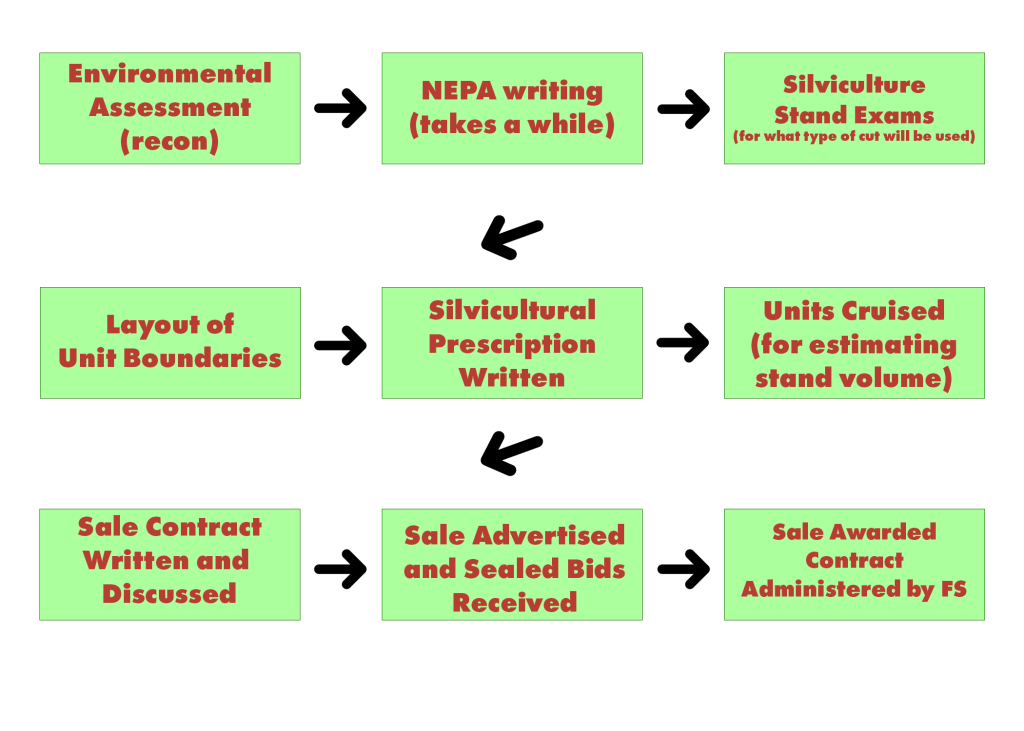
For the last two weeks, I’ve been involved with step 4 of the chart above: laying out the unit boundaries. Normally in a national forest, it’s highly unusual for an intern like myself to be doing this because of how precise the boundary needs to be, but we are currently short-staffed and in the middle of a hiring pause (with people on the way!) which is why I was recruited.
I was tasked with using (a lot of) special Forest Service spray paint to paint boundary lines on the trees that have already been flagged by another forester as boundary trees. The flagging process is beyond my scope of knowledge, but I do know that it involves tying a lot of practical experience with logging systems together with the topography of the sale to decide where the boundary would best fit inside of the unit. I don’t have that experience, so I just played a game of connect-the-trees with the paint.
Speaking of paint, if you want to learn more about it you can read these two forest service documents about handling paint and its specifications.
In the forest service there different colors of paint, which have different meanings depending on the situation. So far I’ve worked with:
- Orange: Boundary of the cutting unit
- Green: Approval of cutting areas requested by the loggers
- Black: Cancellation paint (basically an eraser if you make a mistake)
- Yellow: Tree numbering paint (used in cruising to keep track of trees)
- You can read more about cruising here
- Red: Used to mark keep or leave trees depending on how the contract is written
This week I worked exclusively with orange and black paint to mark the boundaries of the cutting units within the sale.
What are cutting units?
Take a look at the map below:
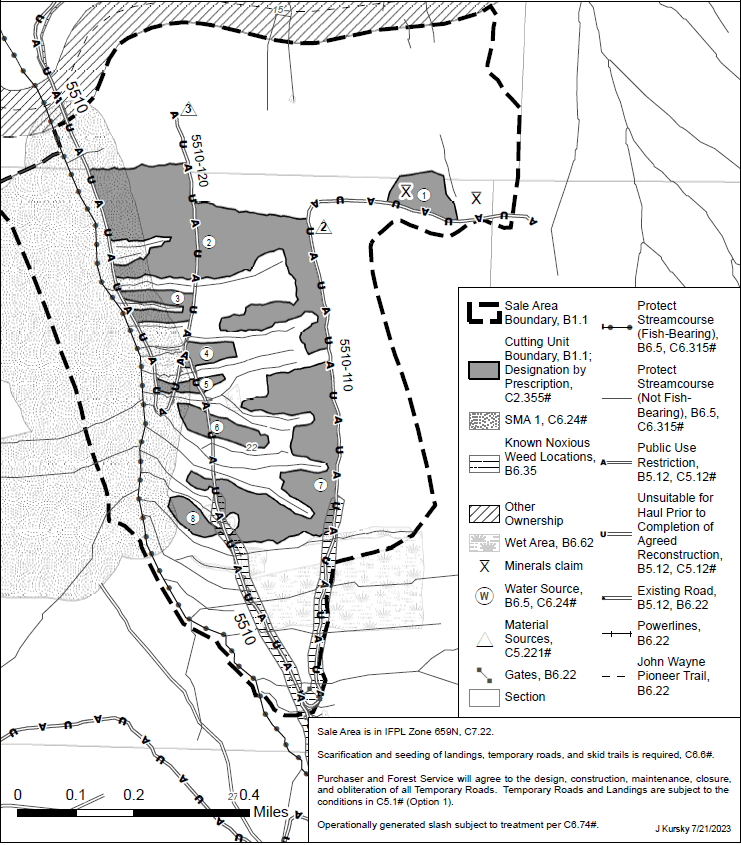
The bold dashed line represents the boundary of the entire timber sale, but the smaller, gray regions represent the units within the sale that are actually going to be cut by loggers. As a result, they have been surveyed and sampled to provide an accurate snapshot of the trees present within those units.
This particular map is from a sale I helped cruise last year, and is currently being logged. More on that later on in this post!
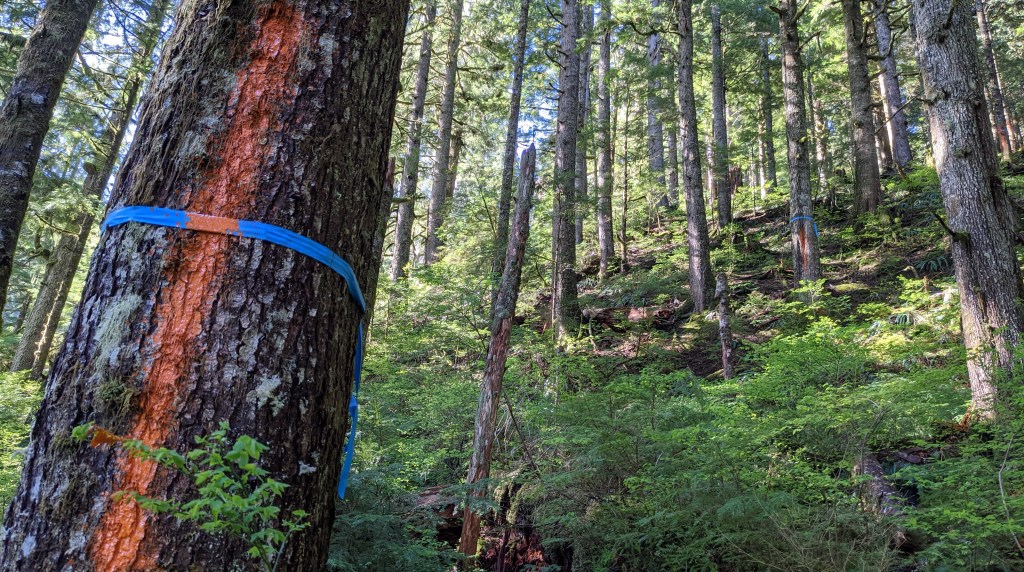
What I did involved a lot of hiking up steep slopes (I measured 85% in one spot) and aligning the lines on each side of the tree with the next tree. In the case of corner trees, I had special boundary papers that I also stapled and sprayed boxes around, but I didn’t get any photos of those.
It’s harder than you’d think trying to align the boundary marks of one tree with another tree that’s 100 feet away from you. It’s even more daunting to realize that the paint is the legal boundary of the cutting unit and acts as an invisible wall, signifying what trees can and can’t be cut.
Throughout all of this I was also taking GPS points with a survey-grade GPS to ensure an accurate area estimation for the units. The data from that will be used for the area of the timber sale, which will come up again in cruising and in the contract.
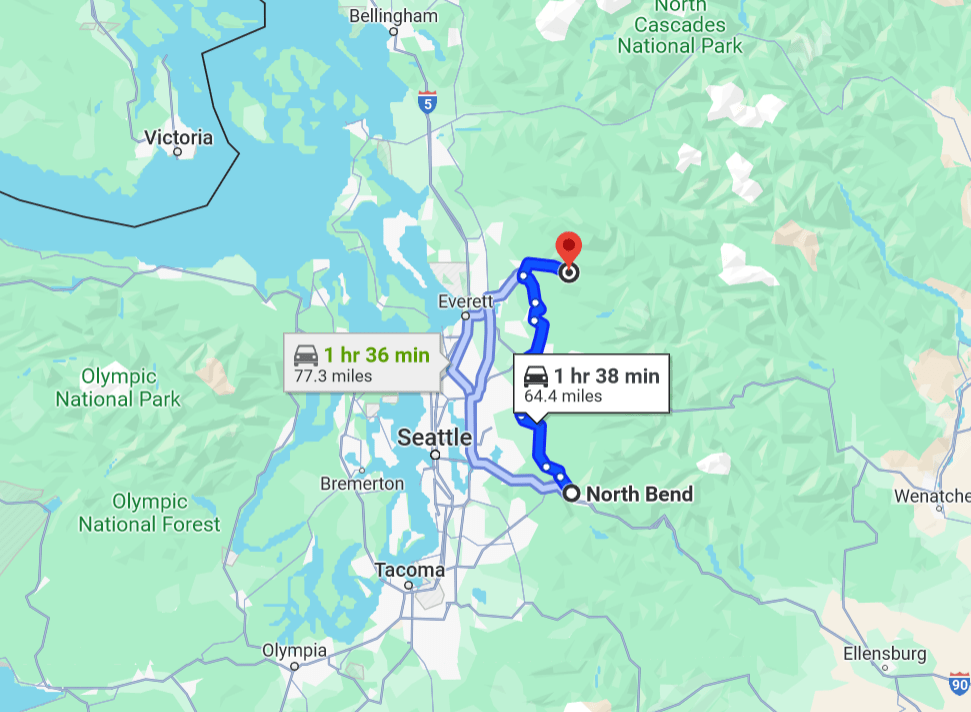
When I got all of that done, I had to take the tablet I was collecting GPS points on, and the units themselves, up to Darrington, WA, where the foresters who were working on this data are stationed out of. It’s about an hour north of Verlot, and 2 hours north of North Bend.
“Okay, but what did you think about it?”
Being in Verlot during the week for the last two weeks would not have been my first choice of how I wanted to spend my time, but it was still fun regardless! It got pretty exhausting hiking with 12 cans of paint, water, and a radio for sometimes 12 hours per day, but I’m choosing to view it as a way for me to get back into shape and to train for the enchantments, which I plan to do later this summer. The scenery on this sale was absolutely superb, and there was even a lookout you could go to that let you see the Olympic Mountains, the Puget Sound, and Seattle (the last photo below).
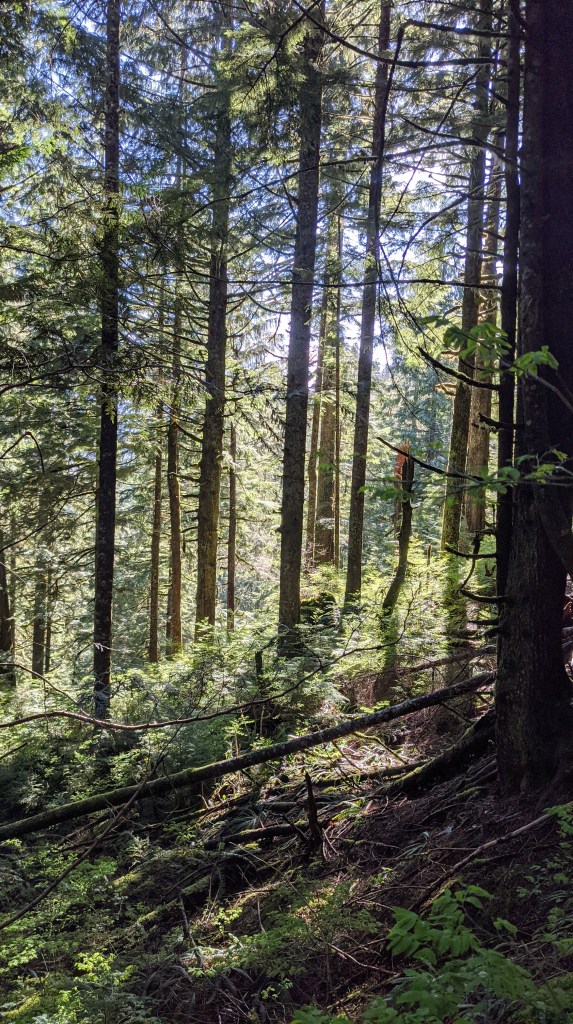
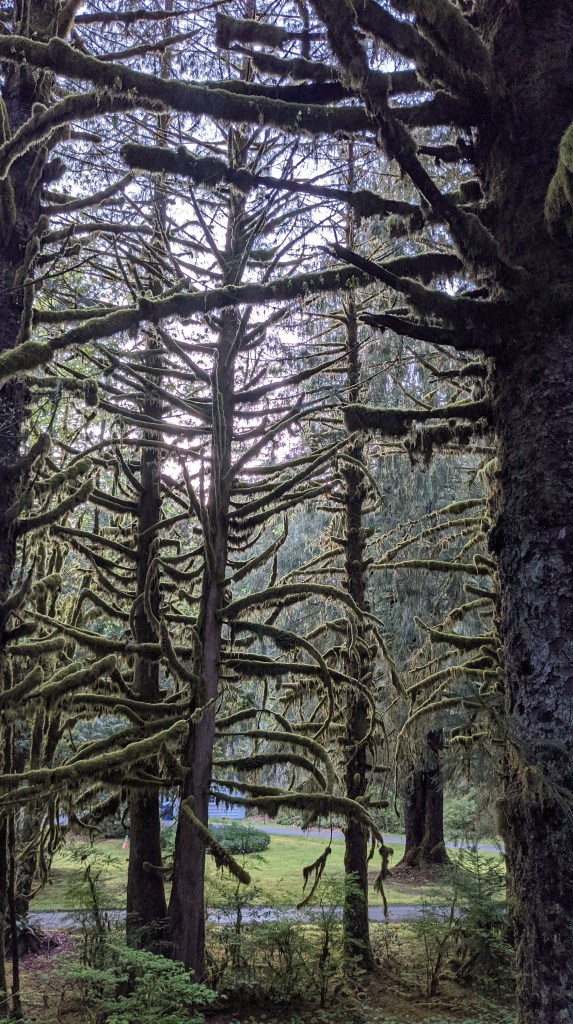
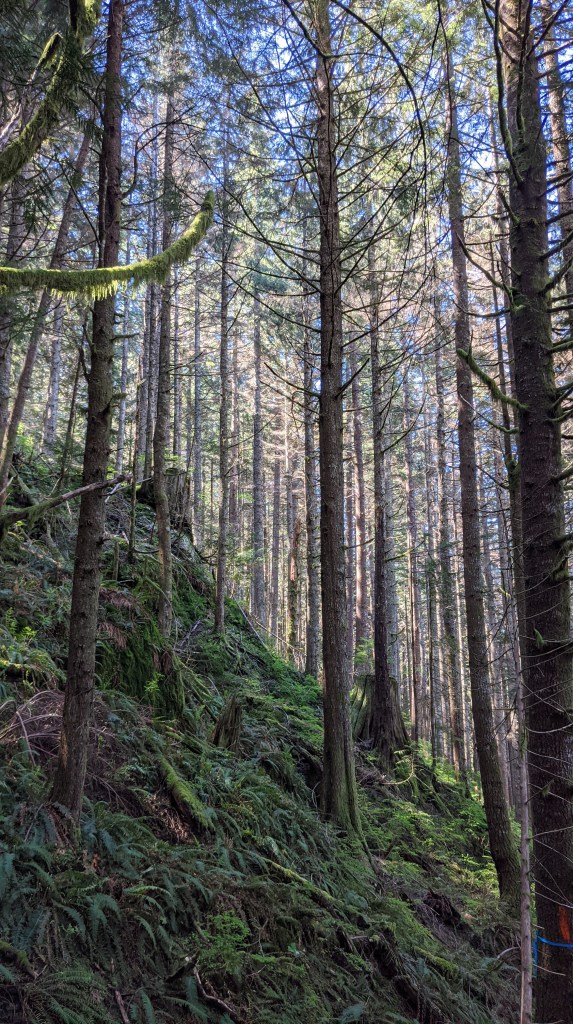
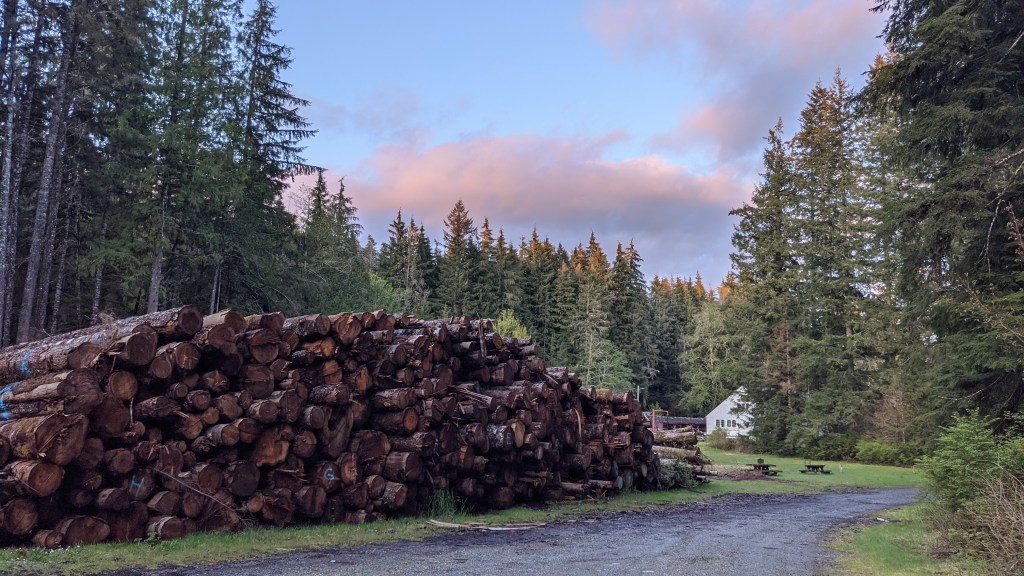
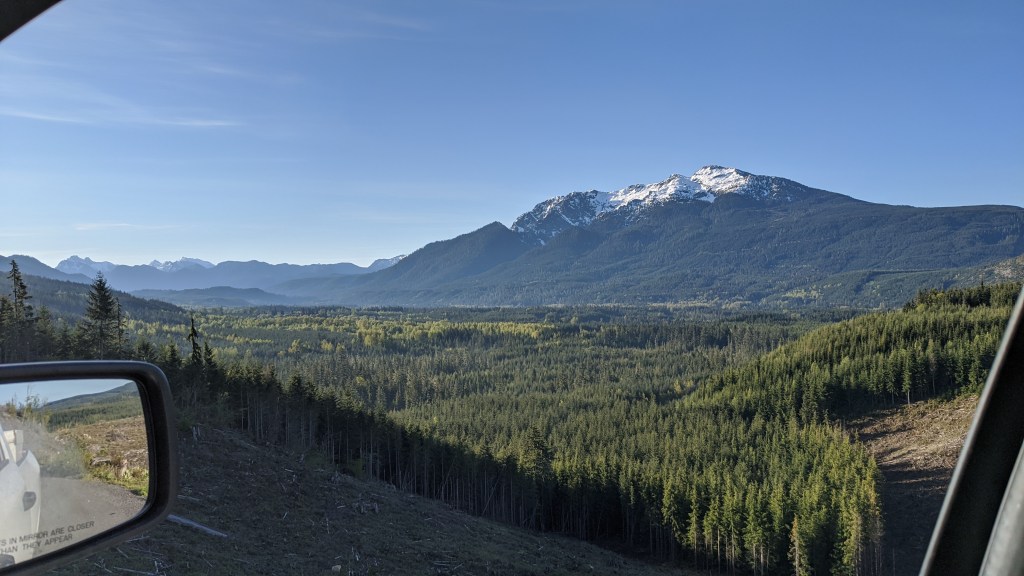
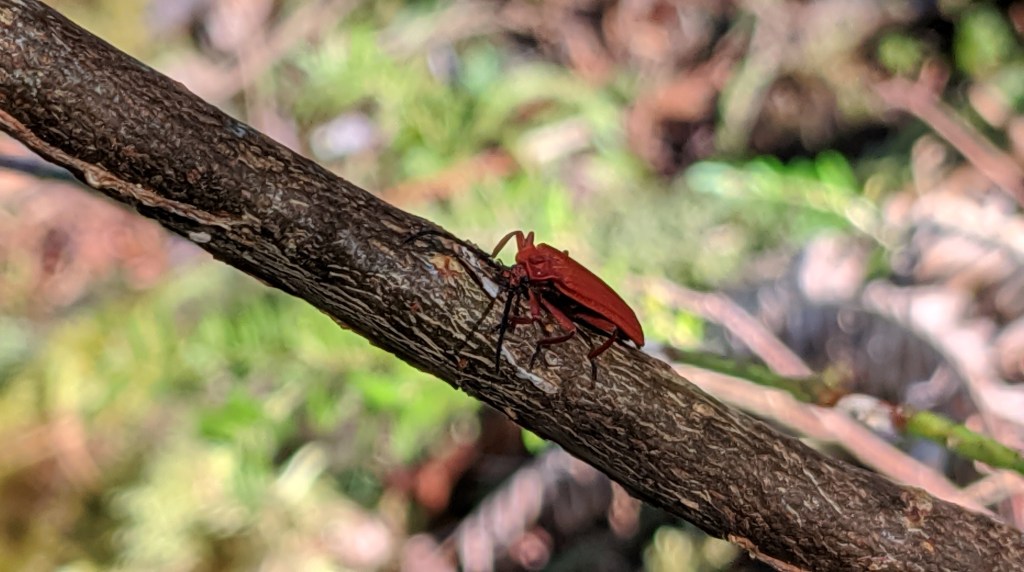
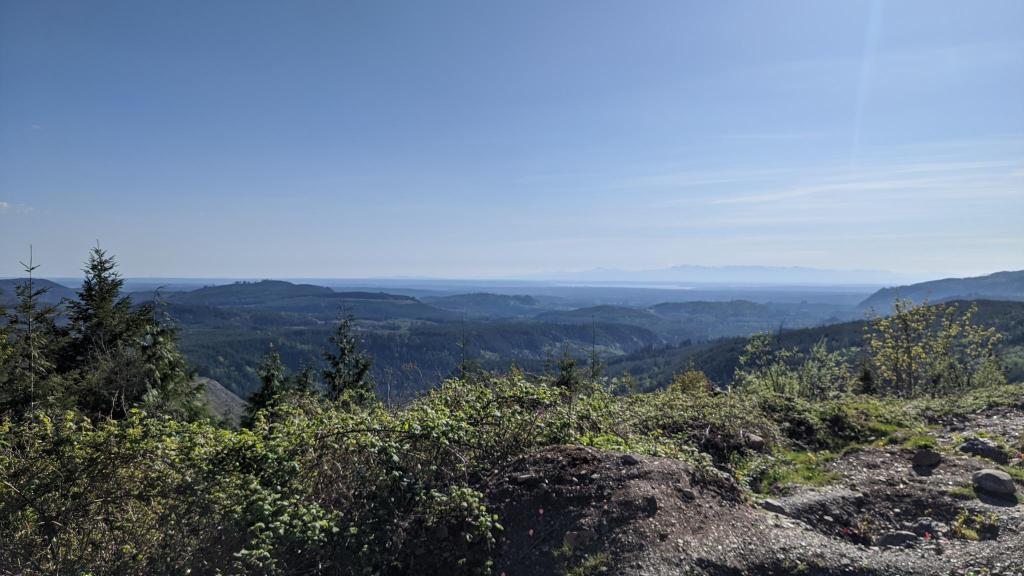
During my first week, I discovered that I was sharing the bunkhouse with some guys from Glacier, WA that I had actually met last year! It was good to see them again after so long. They work on the trail crew there and for the next month, they’re working on a popular trail in Verlot called the Big Four Ice Caves Trail. It’s a notoriously dangerous trail that gets a lot of traffic because of its gorgeous views of Big Four Mountain. The trail itself isn’t dangerous, but people get hurt (and can get killed) going into the ice caves that form below the mountain.
On my final day in Verlot last week, I paid them a visit and got some great photos of Big Four! In second photo, you can see the snow accumulation that will form ice caves this summer from melt. I was lucky enough to see a few big avalanches too, which was really crazy to see in person!

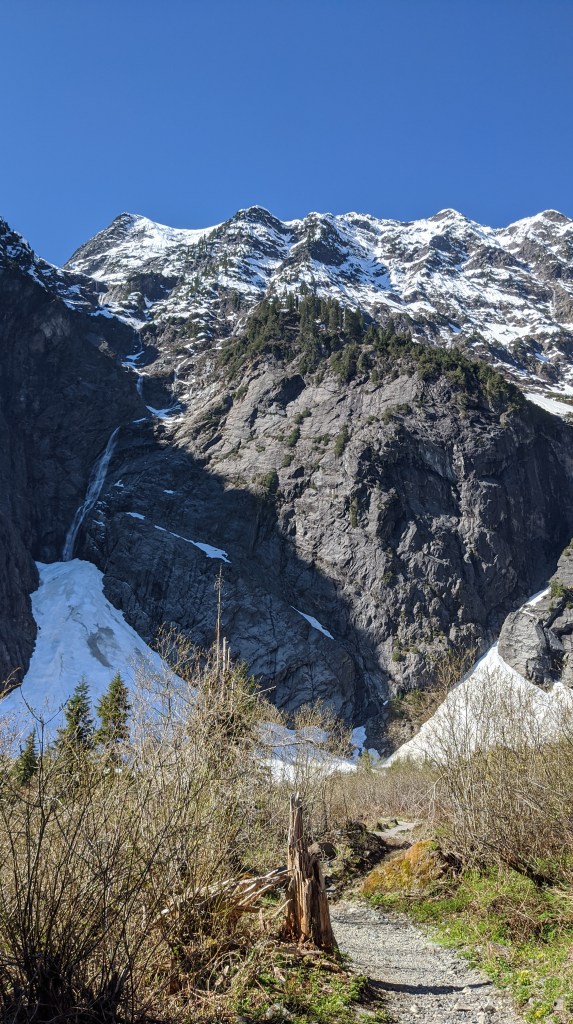
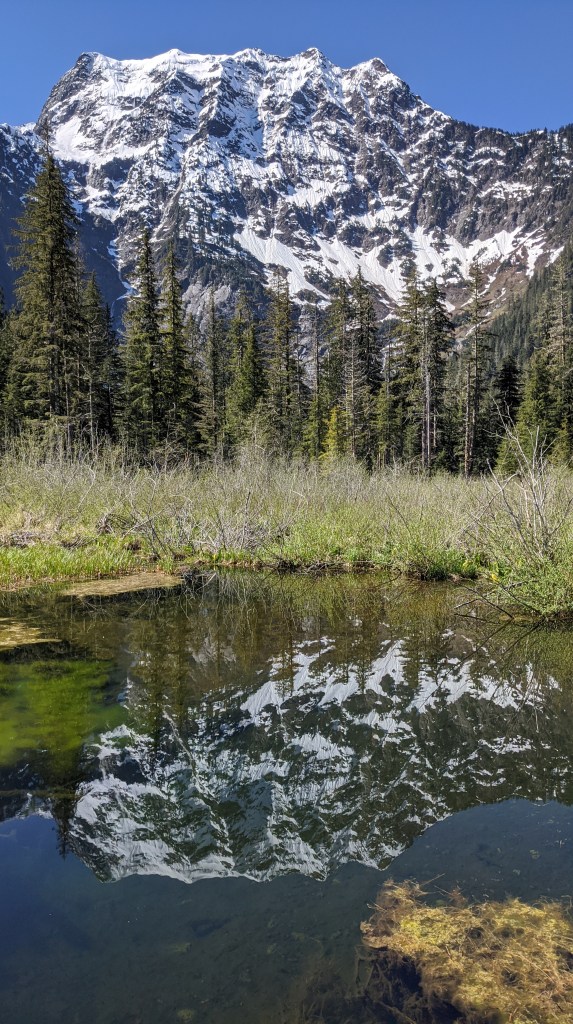
My second week there was unfortunately spent alone. The Glacier guys work 8 days on, 8 days off, so they won’t be back for a while. I’m glad I got to see them while I was there the first week, though!
I watched a few movies at the bunkhouse and got to practice a bit of banjo, which was nice. It was weird being by myself, but I usually got back from work around 6, made dinner, and went to bed shortly after.
On Wednesday night, the power went out at the bunkhouse and there was a period of about 2 hours where I was sitting in the dark by myself. It wasn’t the most fun, but I made do with some improvised lighting and a movie I had saved to my laptop.
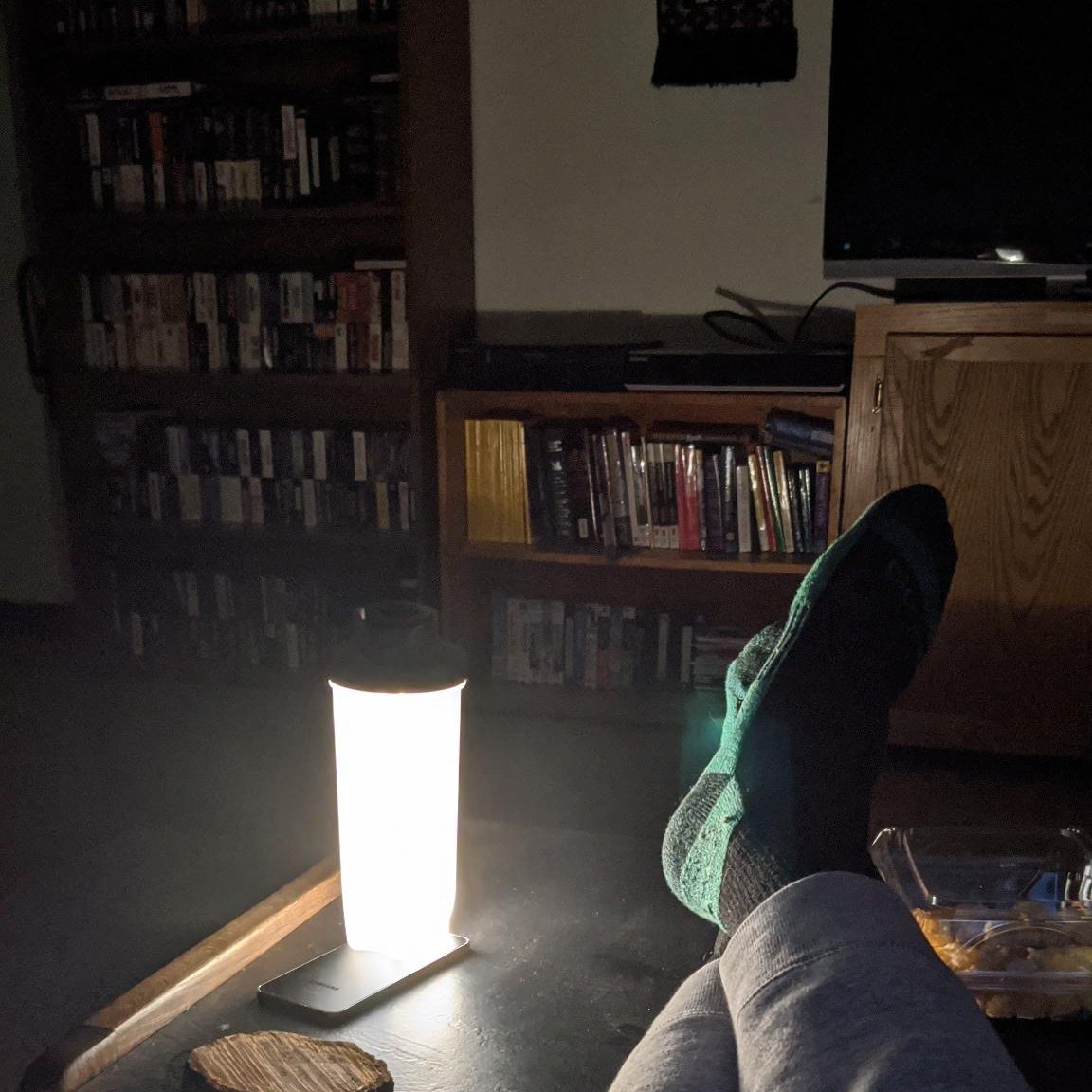
I finally got back to North Bend on the night of the 16th and was happy to be back. I’m writing this post on the 17th, and I think I slept for about 12 hours last night!
After all was said and done, here is what my jacket I was wearing as protection from the paint looked like before and after the last few weeks:
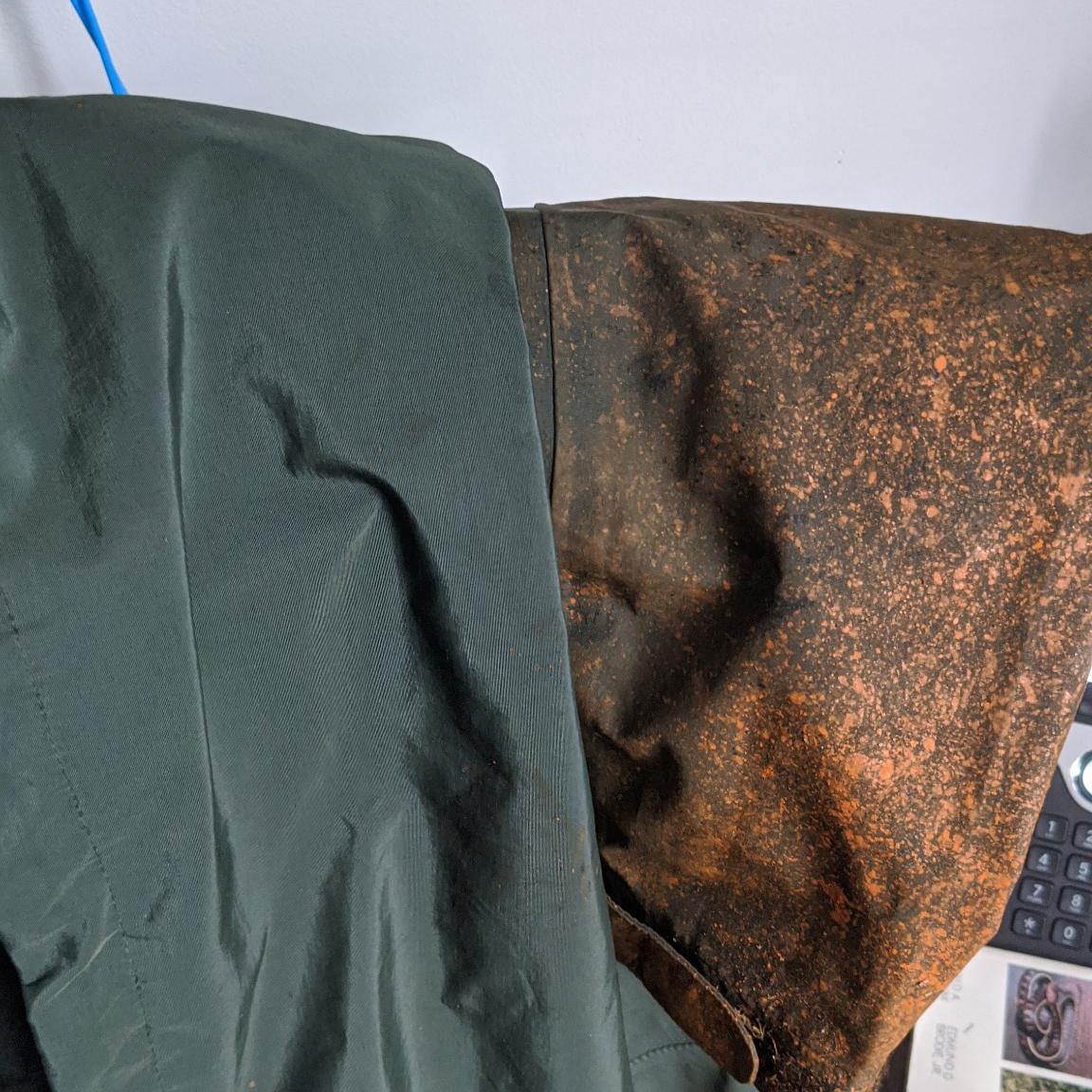
Needless to say I had a lot of paint to wash off of me!
Freeing the Understory
In addition to all of the painting I’ve been up to, I got to see how the logging was going on the Humpback sale I helped cruise last year. I went there on the 13th with my co-pathways-intern, Jean, who does sale administration work. She was there making sure that the slash piles (piles of tree tops, limbs, etc. that the loggers don’t plan to use) were following the guidelines of the sale contract and that the logging sites were looking clean and following proper guidelines.
If you want to learn more about what a Timber Sale Administrator (TSA) does, you can watch this short video from the Forest Service. In brief, they enforce the timber contract that the logging company signed when they bid on the project. If the loggers are doing anything outside of the contract that they’re not supposed to do, the TSA has the legal authority to enact penalties on the loggers.
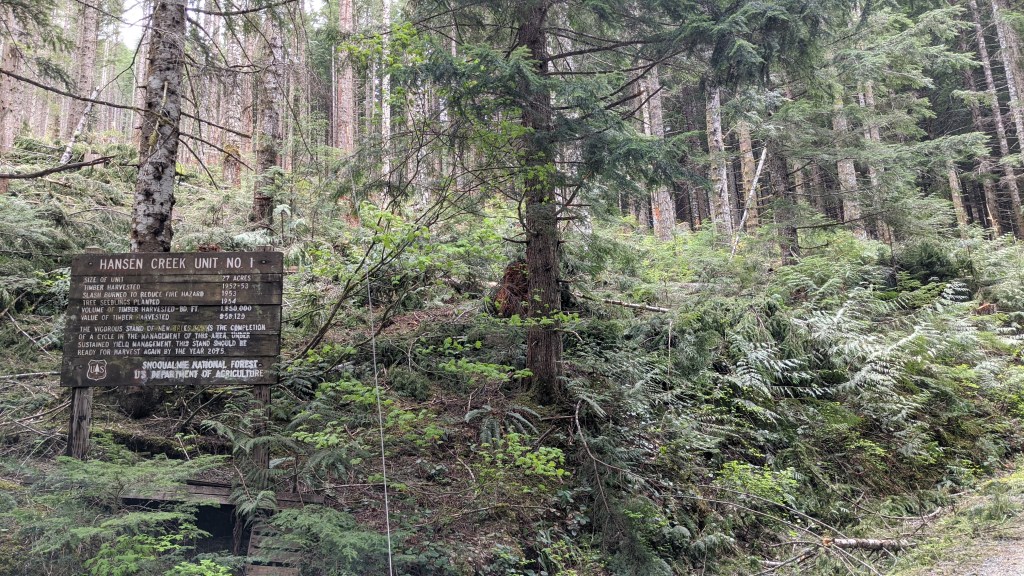
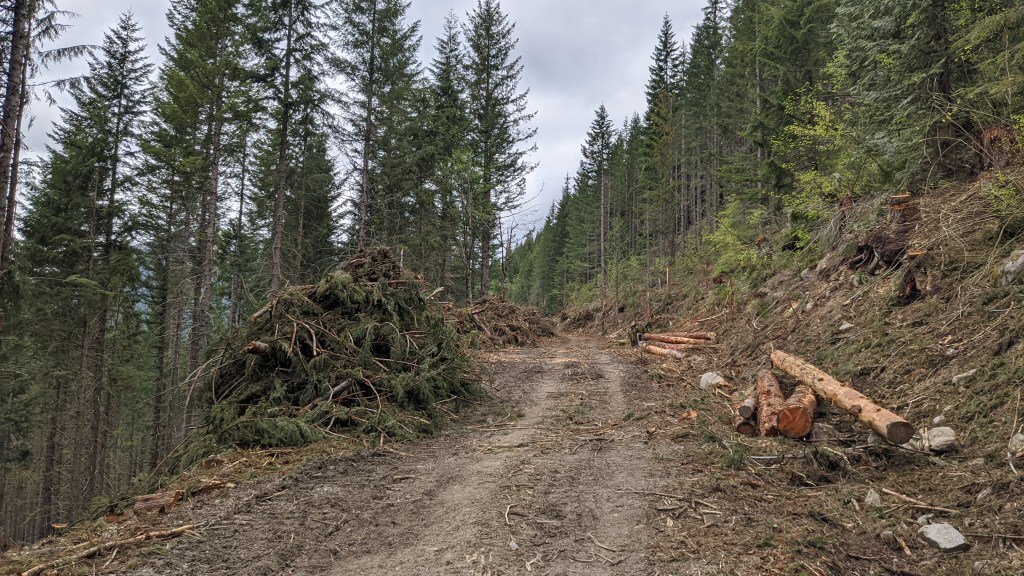
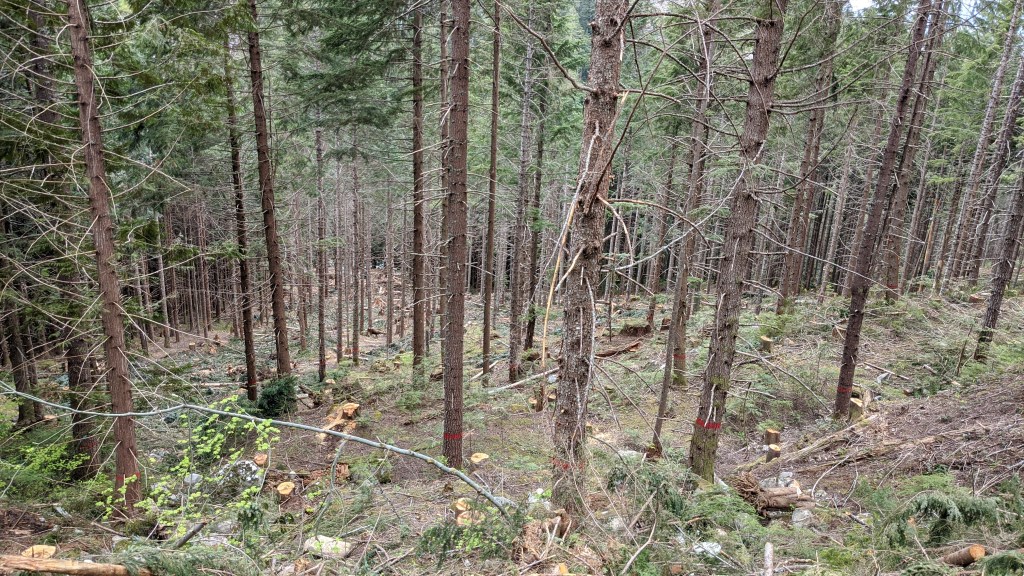
Here are some photos from the sale! After having seen it last year, it looks much healthier and the understory has much more room to develop. The big bile of brush on the left of the second photo is one of many that Jean and I were looking at on Monday.
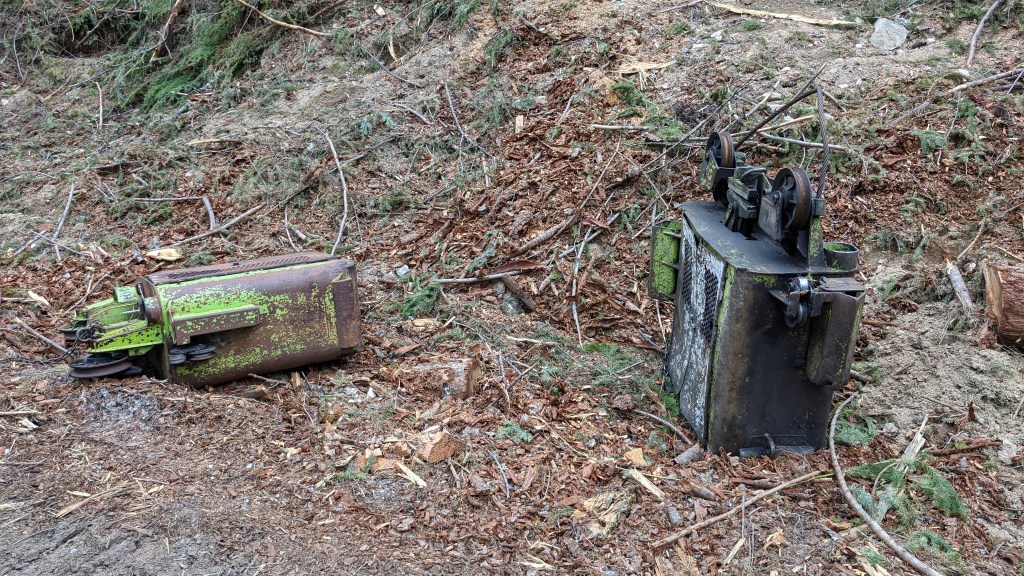
The last photo is of the carriages used for cable yarding, which is extremely common in the pacific northwest. I did some work with this last year, but if you’re new or would like a refresher, this video does a good job of explaining what it is! It’s essentially a system used by loggers to pull logs up via cables suspended in the air by two anchor towers at the top and bottom of the hill. Since slopes are extremely steep here, this is a better way to get fallen trees from the ground and up to the logging site.
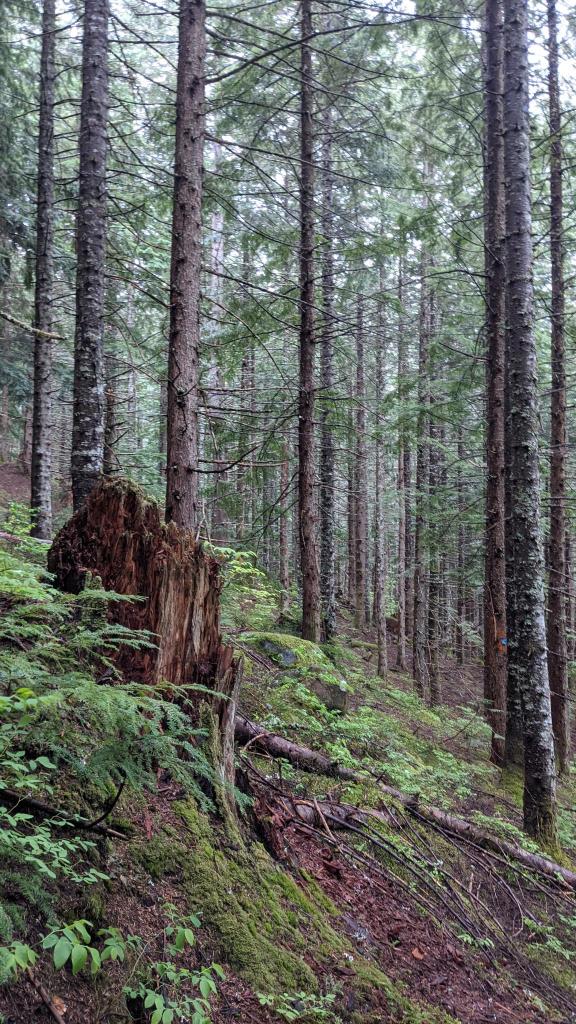
For comparison, here is a photo from the sale when we were cruising it last year. Notice how dense the trees are and how little understory there is. There was no chance for new trees to establish themselves in that dense of a forest, although some certainly tried!
And Now For Something Completely Different
Aurora
You may have heard about the aurora that hit the northern hemisphere last week! Luckily the Seattle area had clear skies and was able to get some amazing views of it. I just walked out to the parking lot of our compound and took photos with my phone and my DSLR.
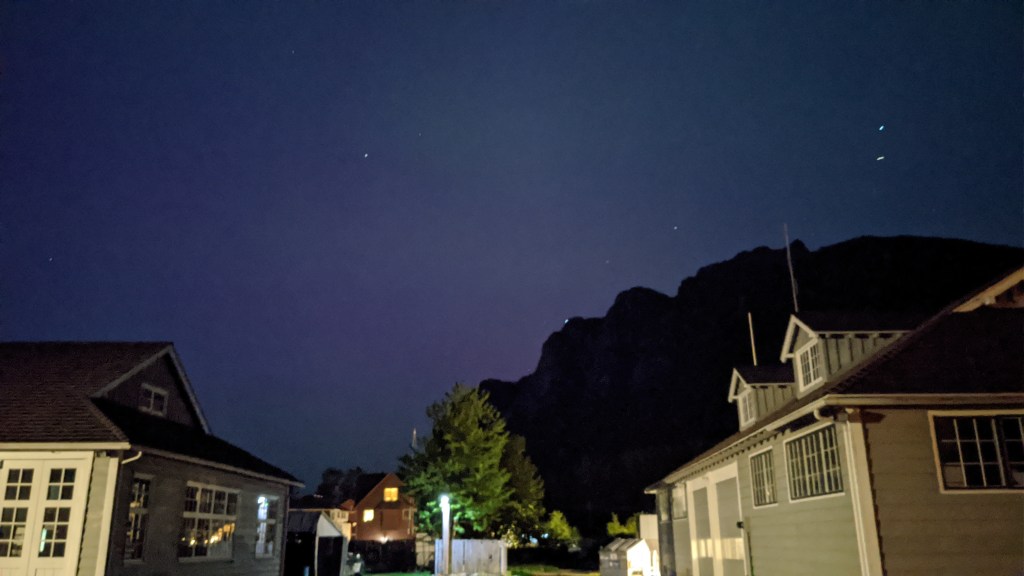
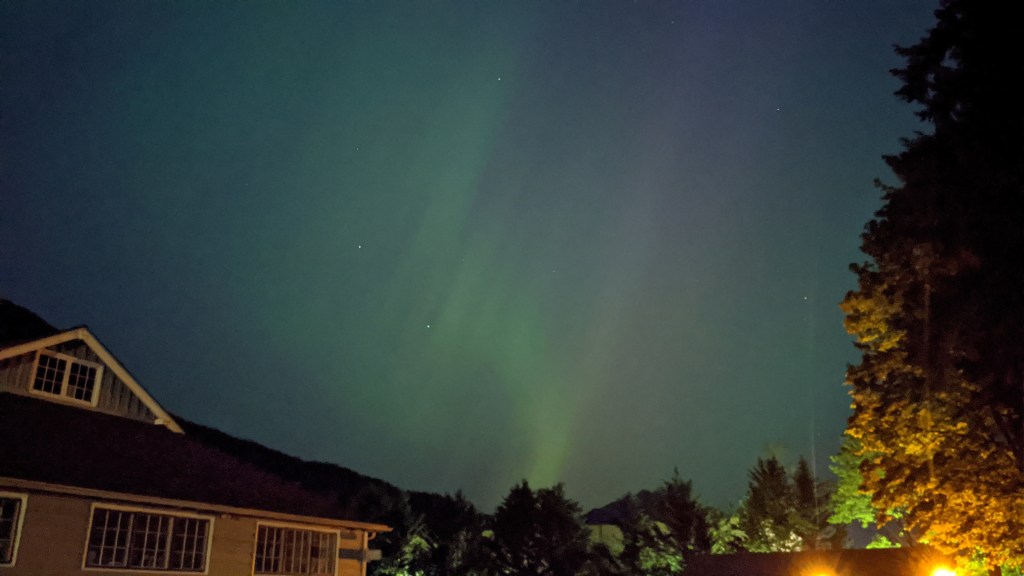
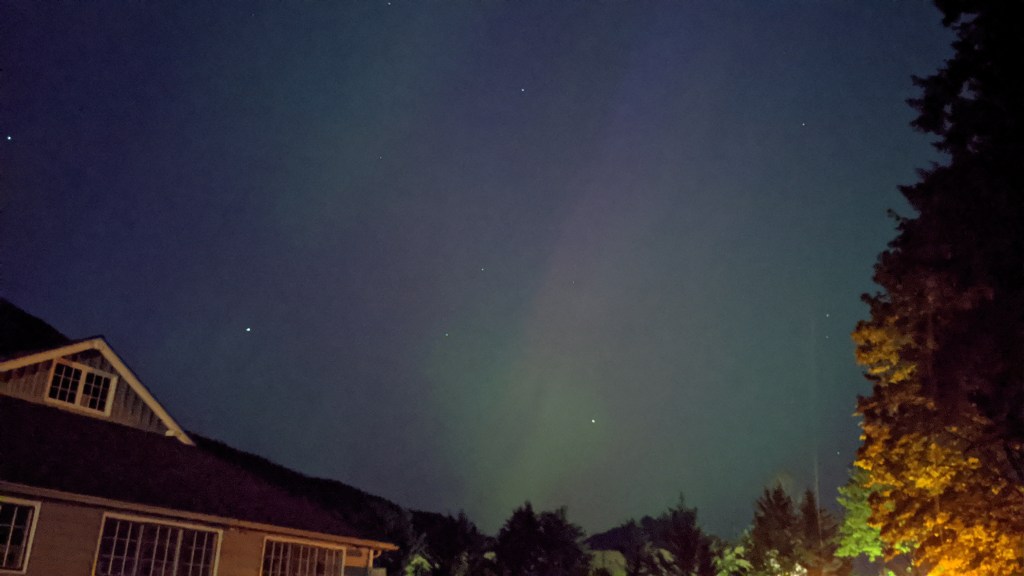
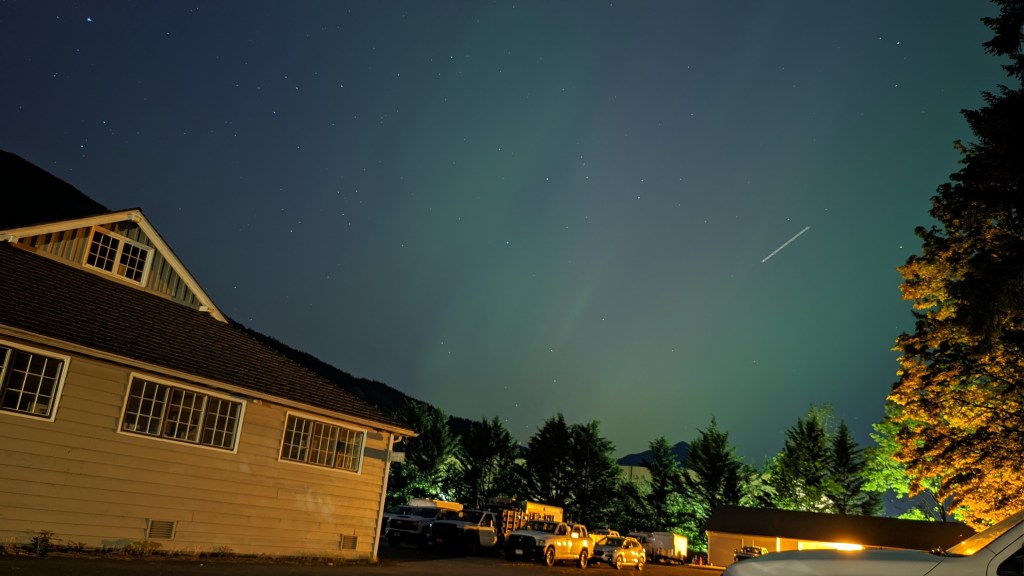
I was able to get a faint glow from Mt. Si, but the majority of the activity was to the east, away from the light pollution. It got so strong at one point I was able to see it dancing with my eyes!
Go Club
I got interested in the game of Go last year in October when some friends of mine tried to start the Lexington Go Club. That part is still a work in progress, but my interest in the game has only gotten stronger since then. I knew that Seattle had a very strong Go community and was very excited to meet them when I came back to Washington for the summer!
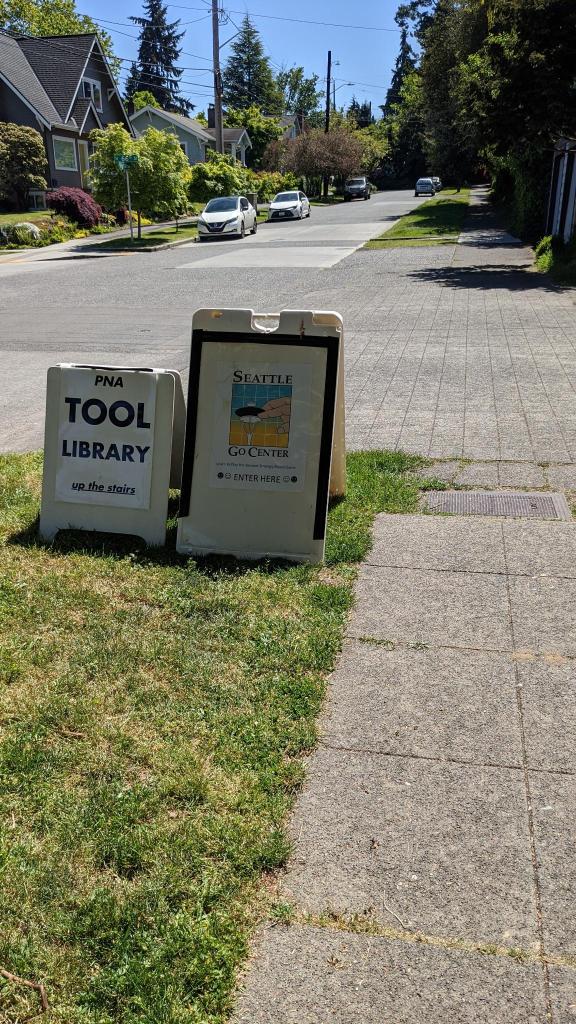
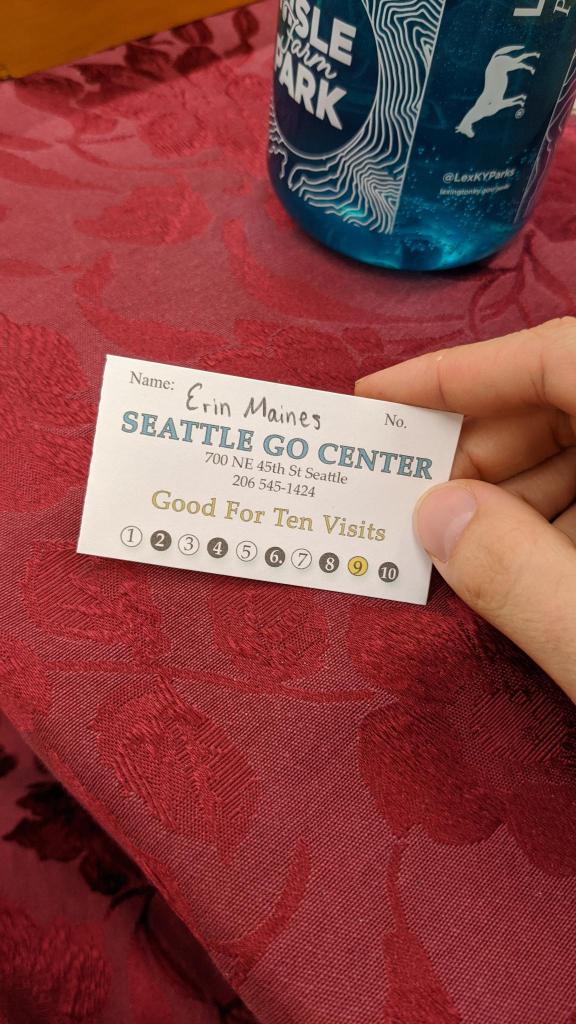
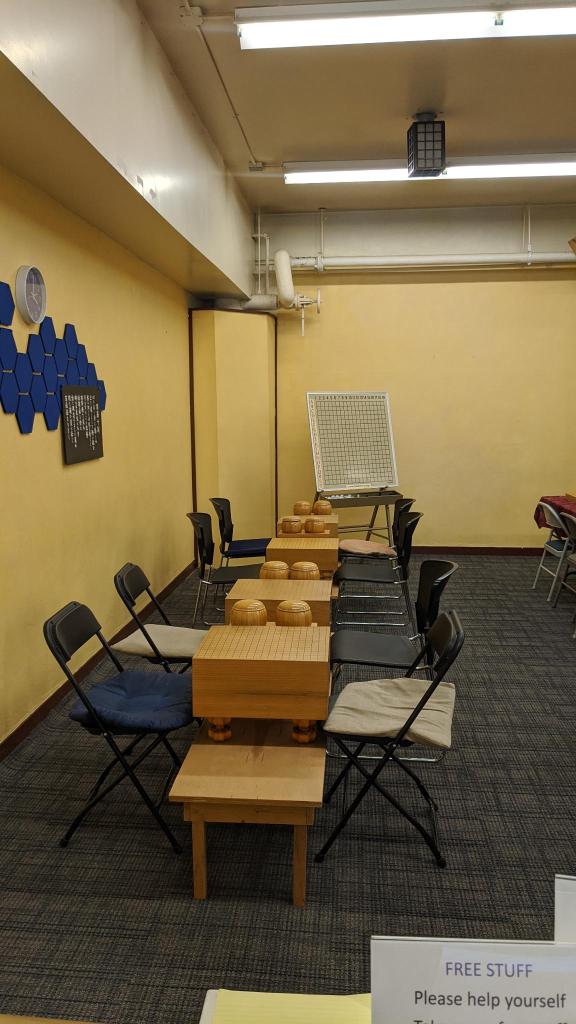


I took the bus on Saturday last week to the Seattle Go Center so I could play against other Go enthusiasts, and I had a wonderful time!
I got to meet a Russian beginner named Natasha who had never played go before. We actually got to talk a little bit in Russian about the rules of Go and how to play. I played several games of Go with her to show her the ropes and she seemed enthused and that she wanted to learn more!
After I played with her, I played with a guy who was about my level in Go named Brian. He ended up beating me by 20 points, which sounds like a lot, but it was a very close game the entire time. In the second to last photo above I was black and he was white.
I learned about some volunteering opportunities with the Go center, so be on the lookout for a post about that soon! I’ll be helping out with a street fair this weekend, which I’m excited about.
Rattlesnake Ledge
On Mothers’ Day last week, I called my mom and then went hiking on a pretty popular trail called Rattlesnake Ledge. It has been on my list of trails to do in the area for a while, and I was excited to finally do it! It was fairly easy compared to the other trails I’ve done in the area, but that was good for me because I’m still getting my mountain legs back from last year.
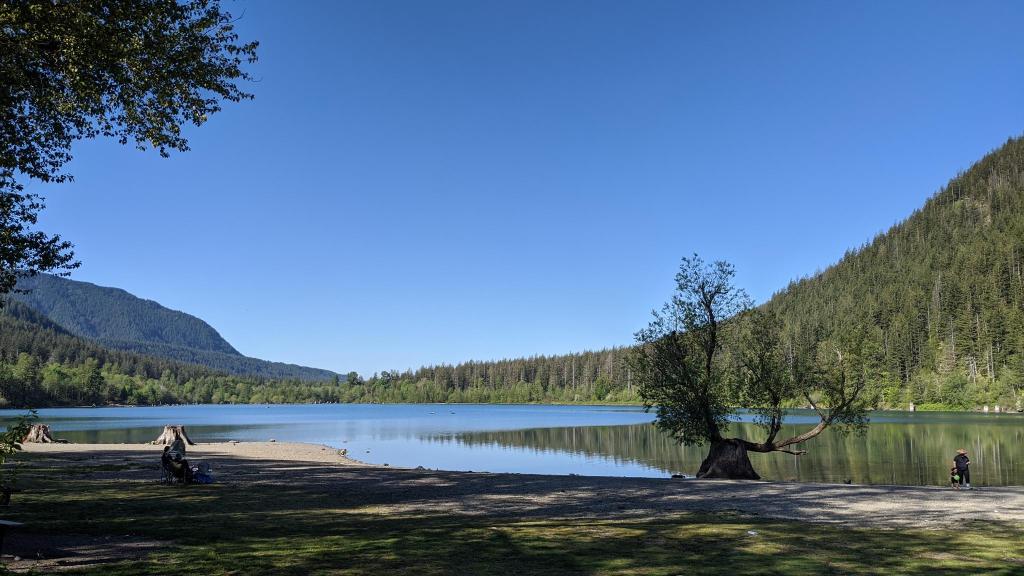
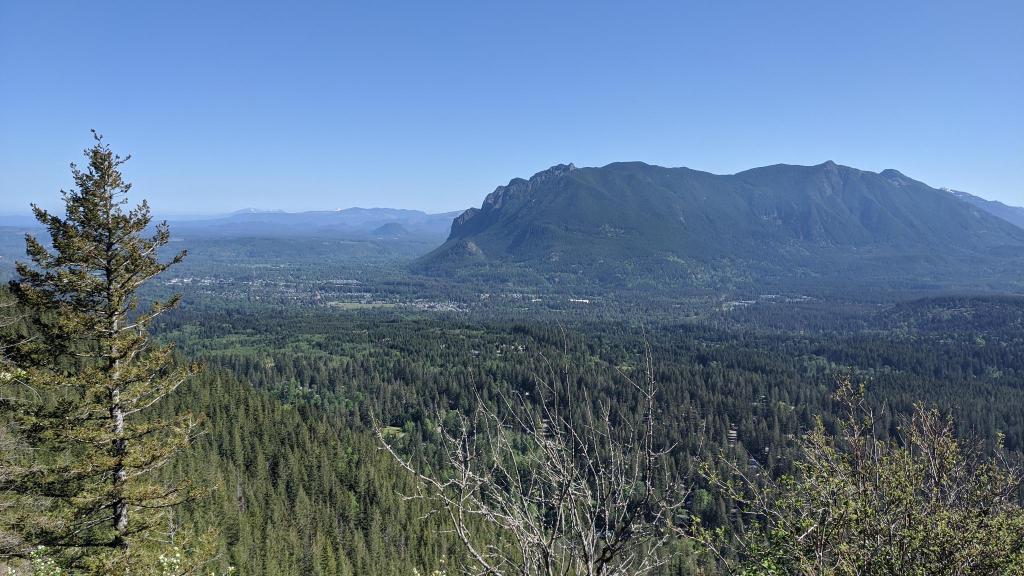
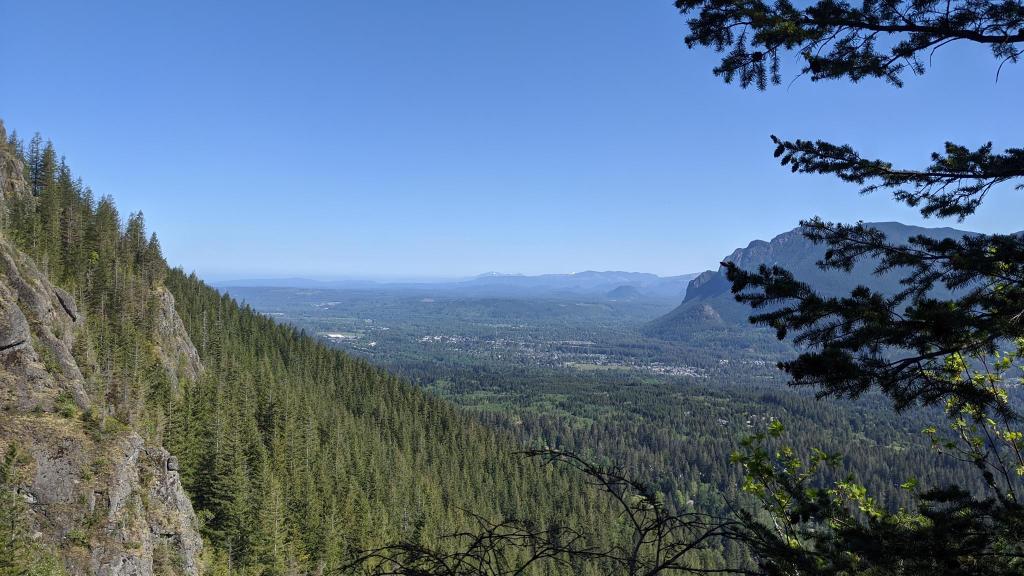
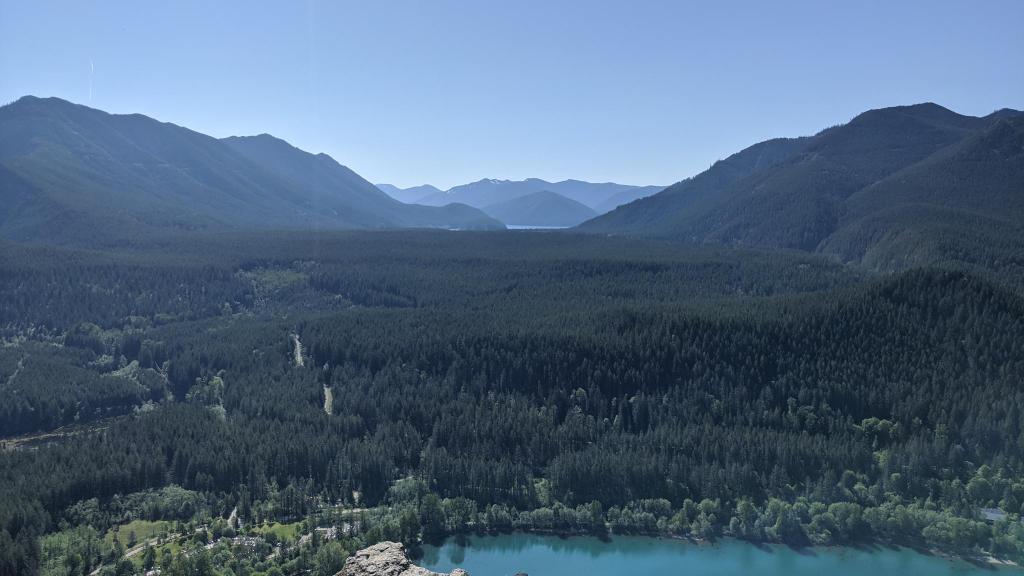
It took me about two hours to get to and from the parking lot, which is pretty good for these mountain hikes! In the second photo you can see Mt. Si and I’m sure somewhere in there you can see the ranger station.
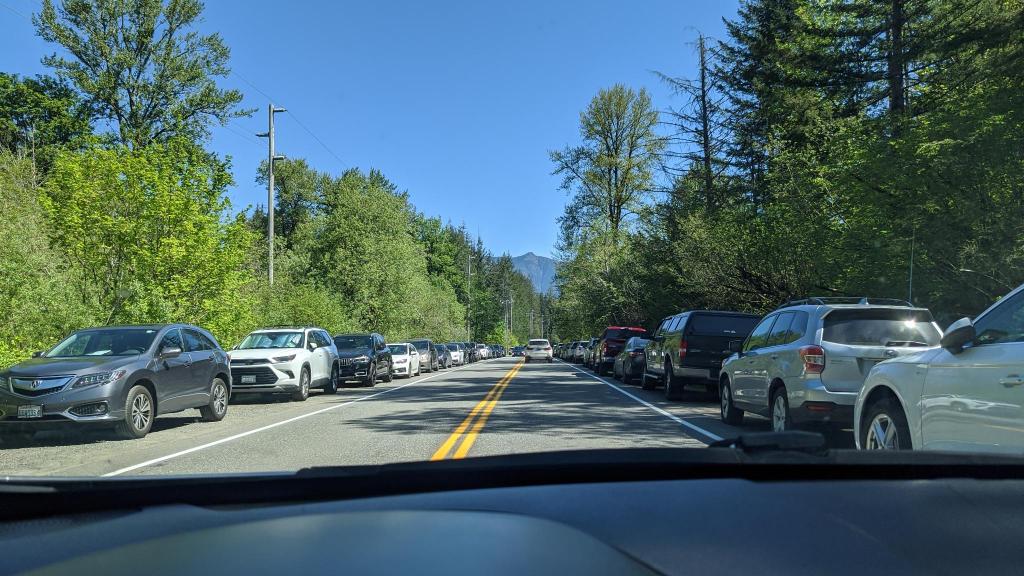
My only complaint is that the place was absolutely PACKED! There were so many hikers that I had to pass and there were even more that were passing me. I think I said “passing on your left” more times that day than I ever have in my entire life. As I was leaving, I saw just how busy it got – people had filled up the parking lot and were already parking on the shoulders, which is typical for this trail this time of year.
Mill and and Tree Farm Tour
The final thing I’ll write about this week is a mill and tree farm tour that I went to with the Northern Puget Sound Society of American Foresters (SAF). I went on Wednesday in the middle of work, and it was a pretty interesting experience!
We got to see Pacific Rim Tonewood’s mill that makes wood for guitar luthiers, and some of their clients included Gibson and Fender. It’s a fairly small mill, but they do all sorts of acoustic testing on the wood and mill the wood in such a way that they can fold it booklet-style for the guitar manufacturers. They also sell kits you can get to make your own guitar, which was interesting!

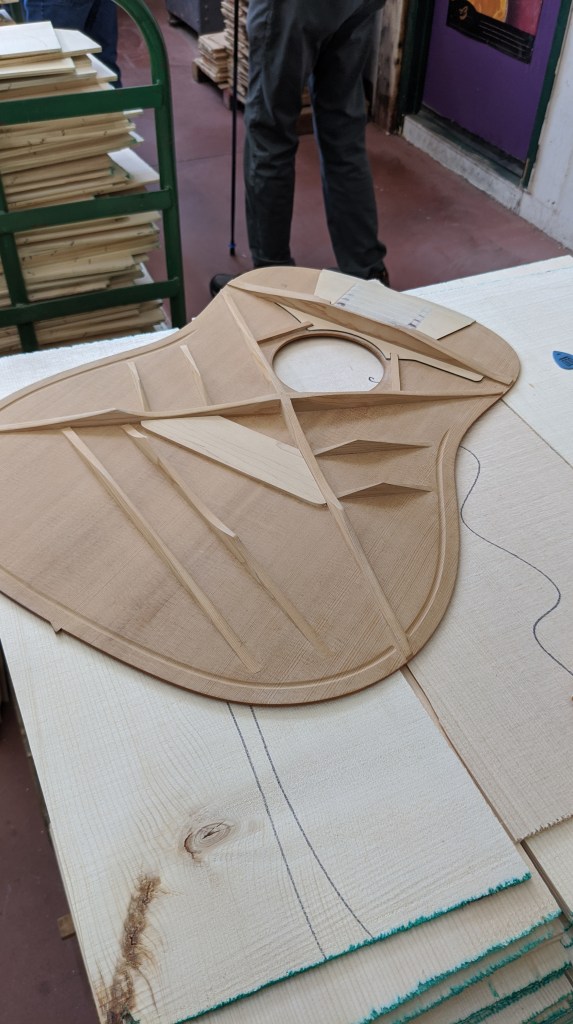
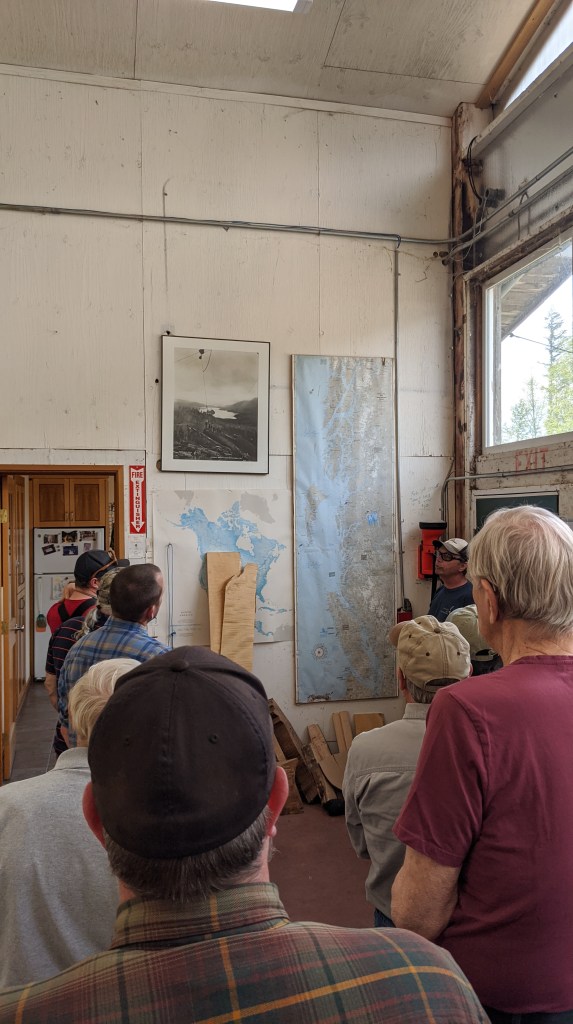
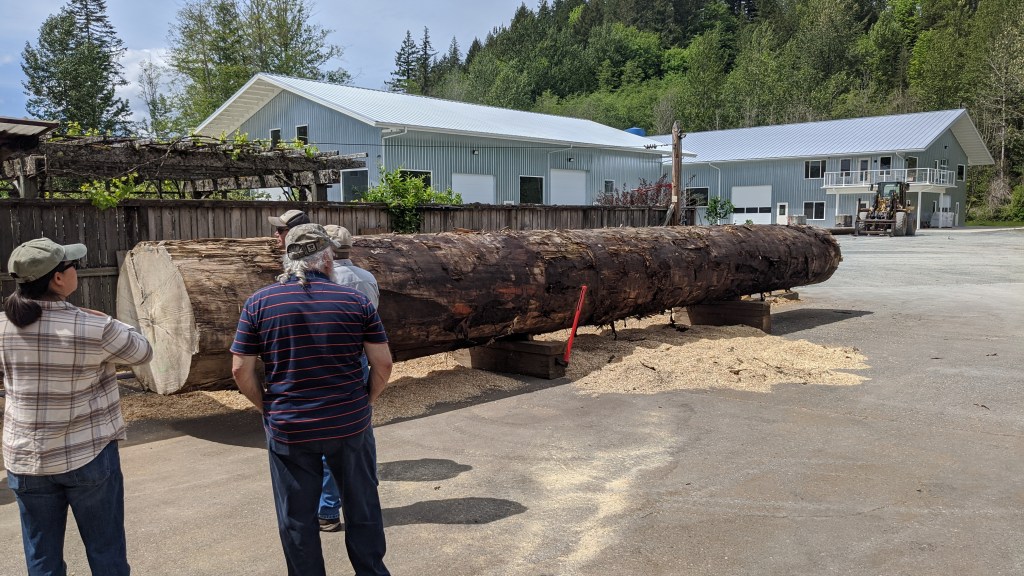
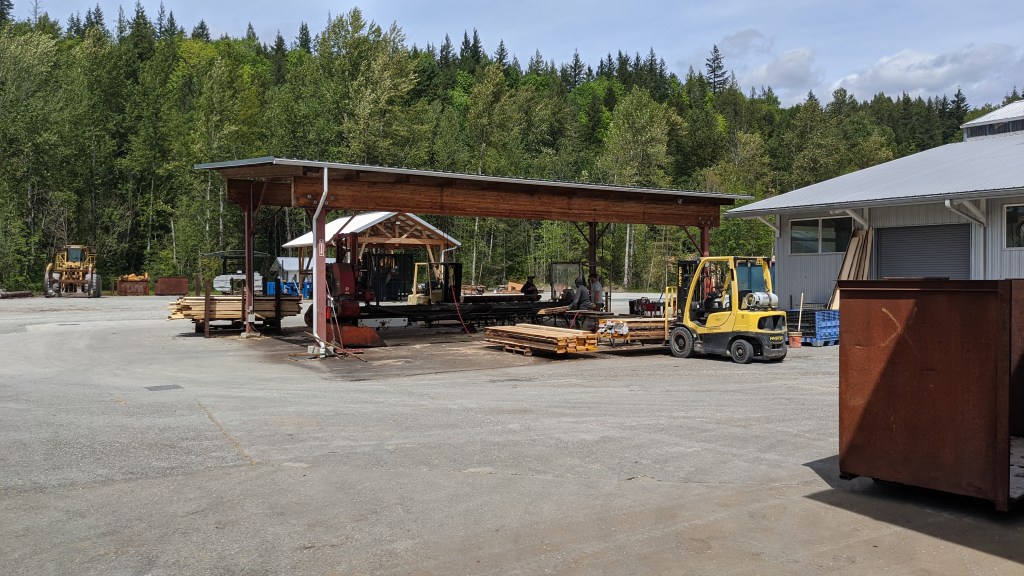
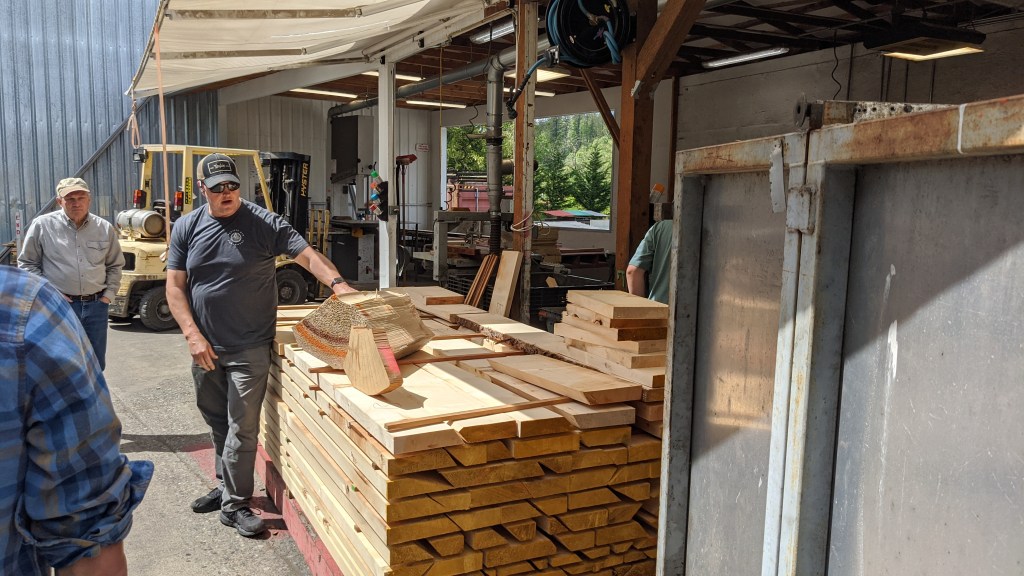
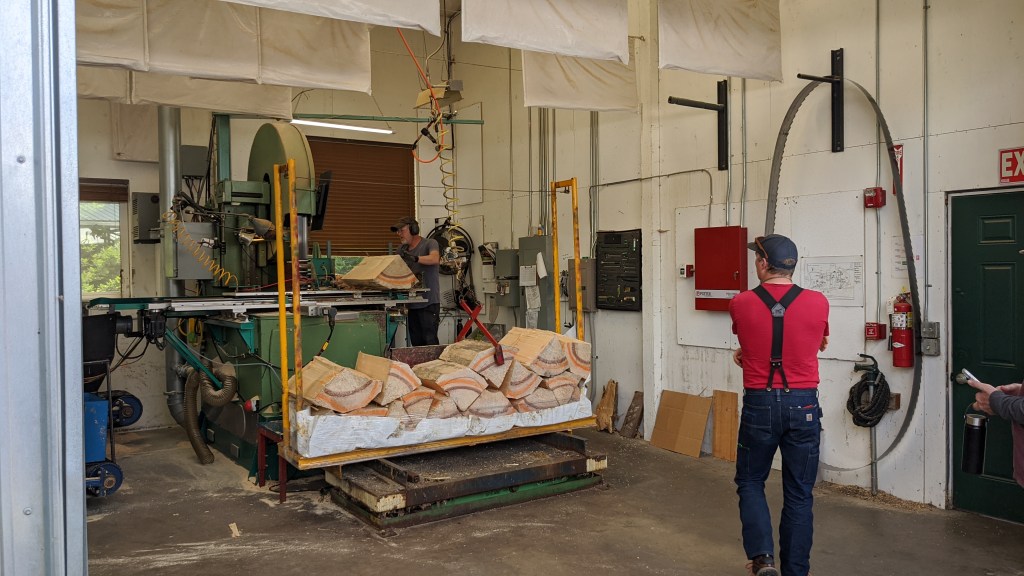
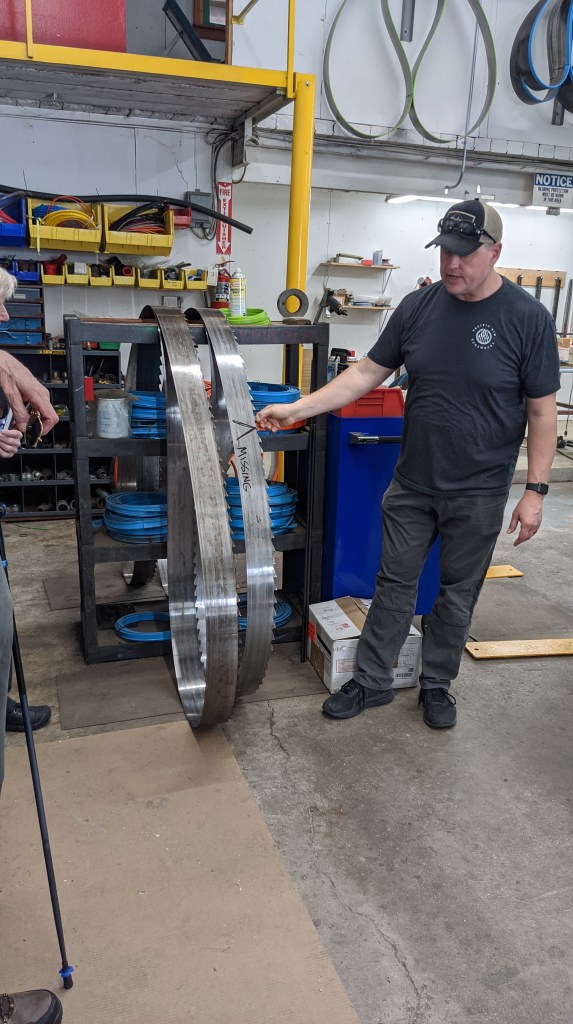
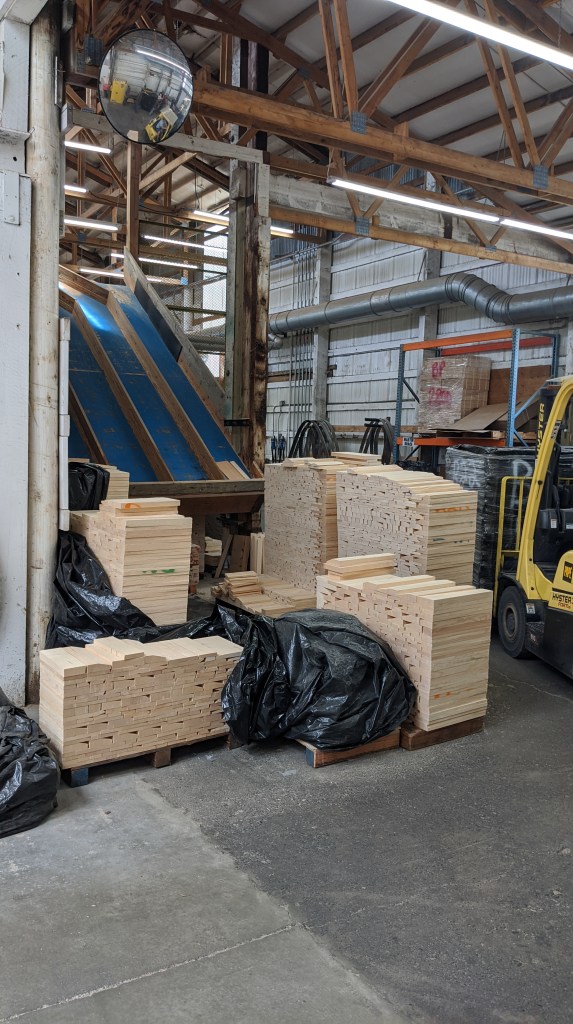
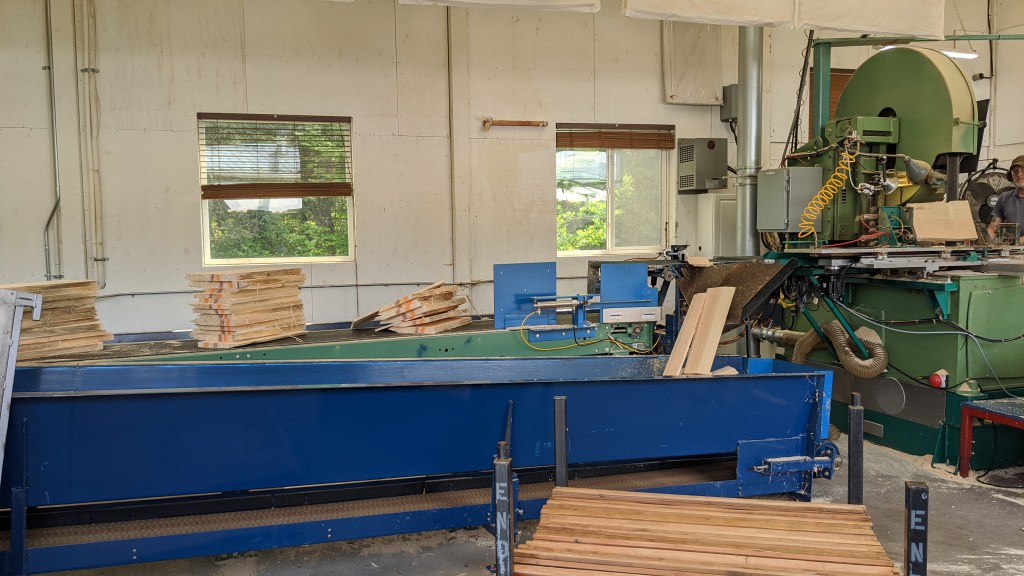
Most of their woods comes from British Columbia, Canada, or from southern Alaska, but occasionally they’ll use wood from Washington. They mostly want spruce for guitar, but they have some hardwood plantations in Hawaii and more recently they’ve started an experimental plantation in Washington.
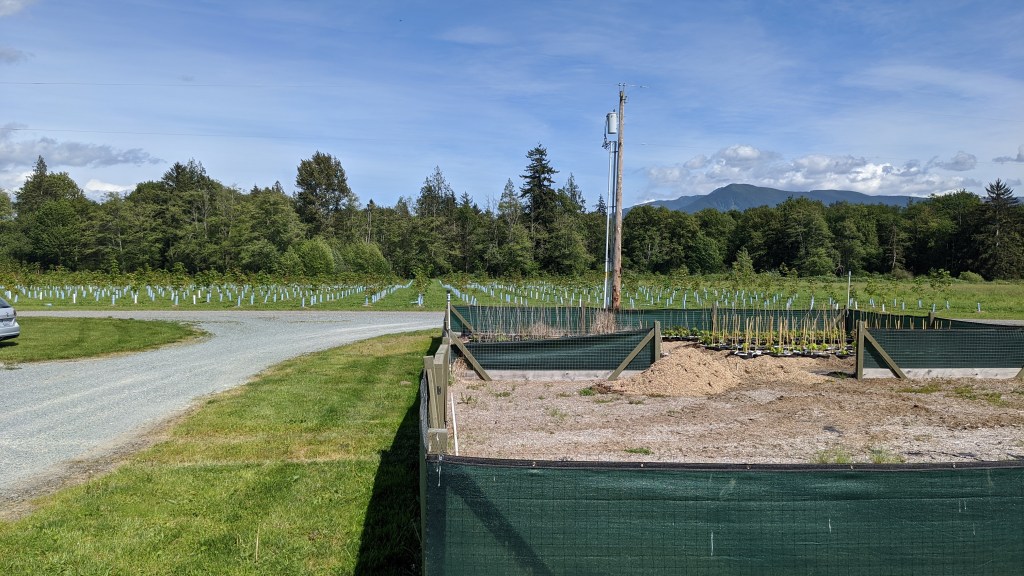
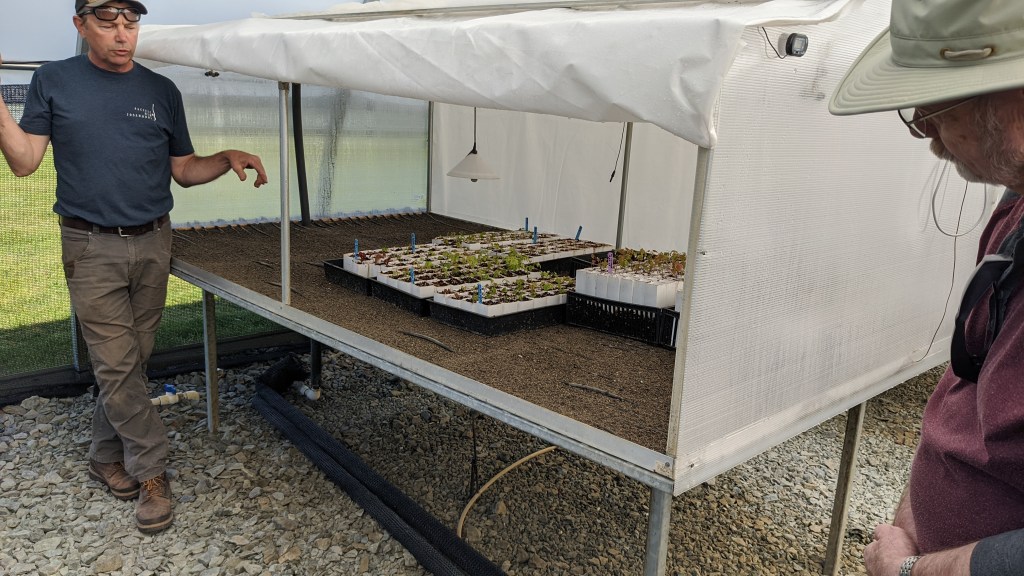
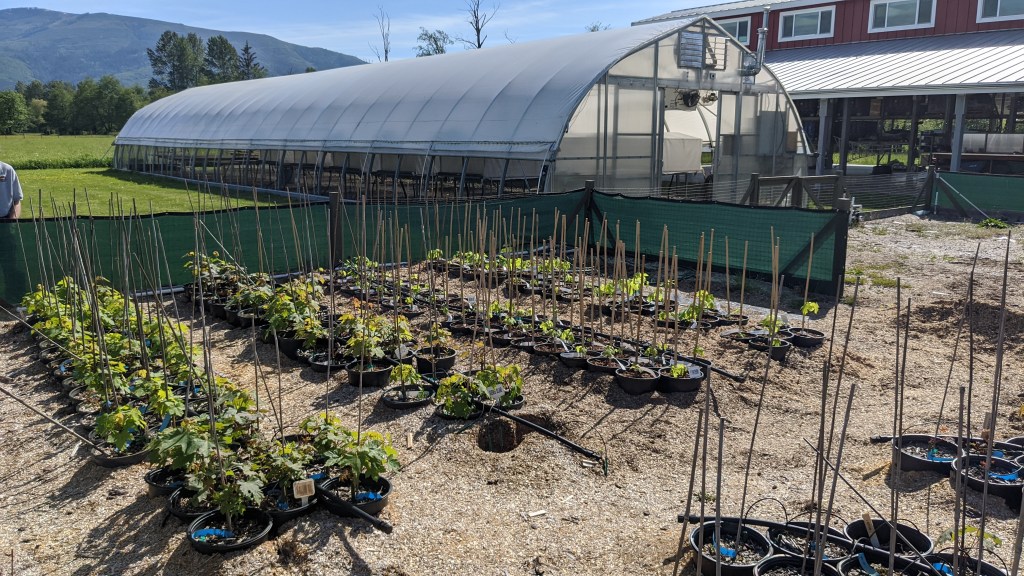
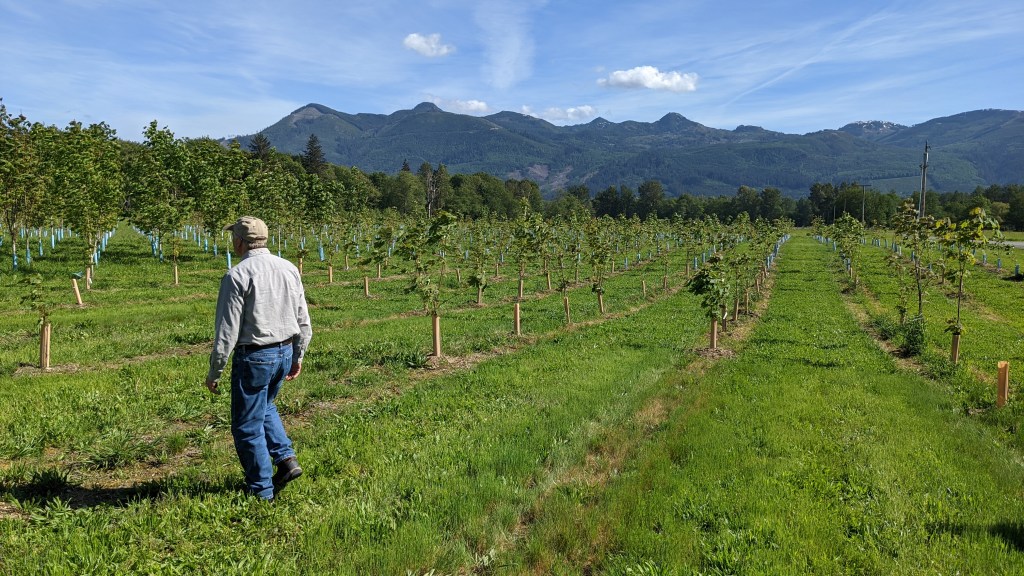
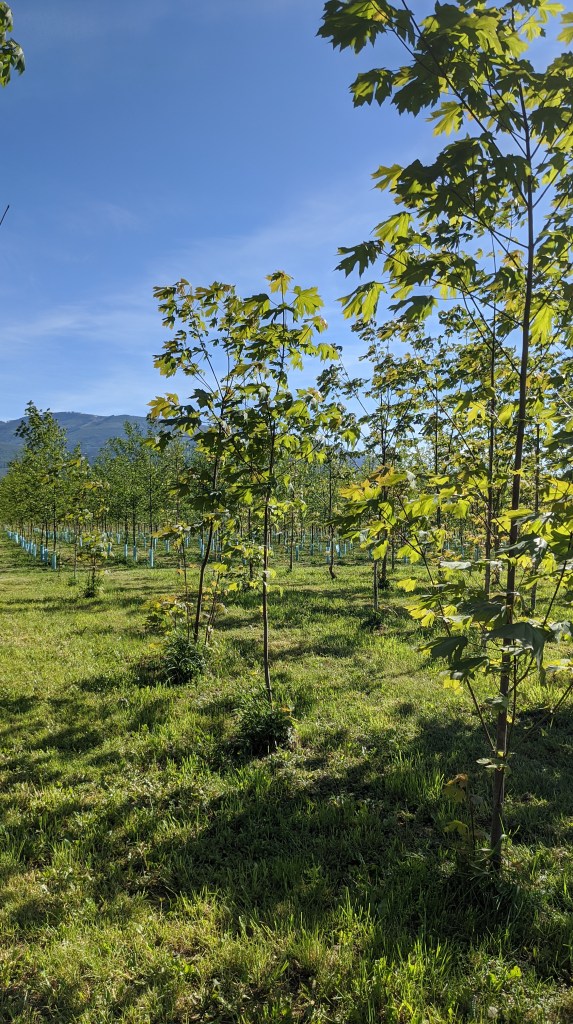
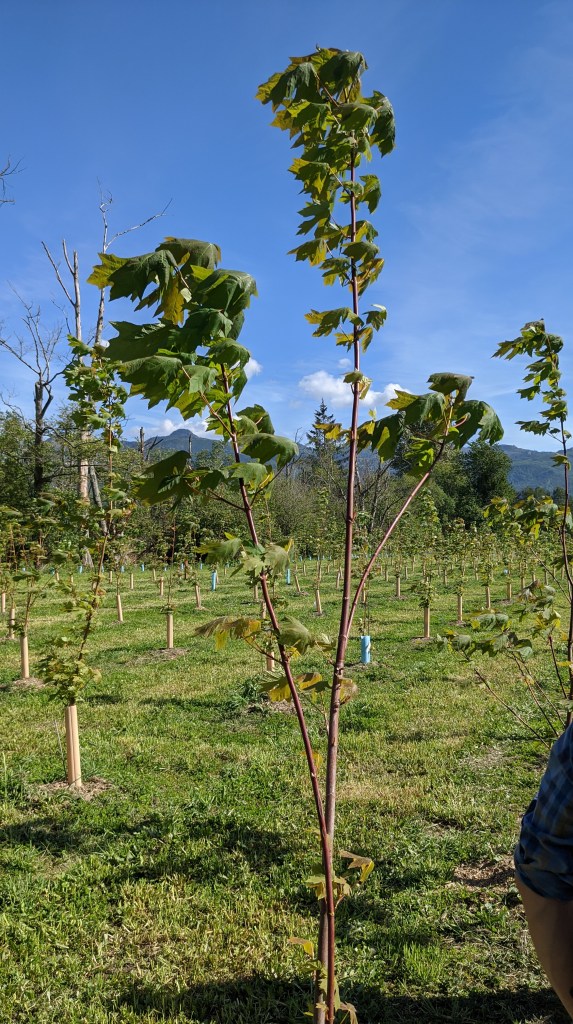
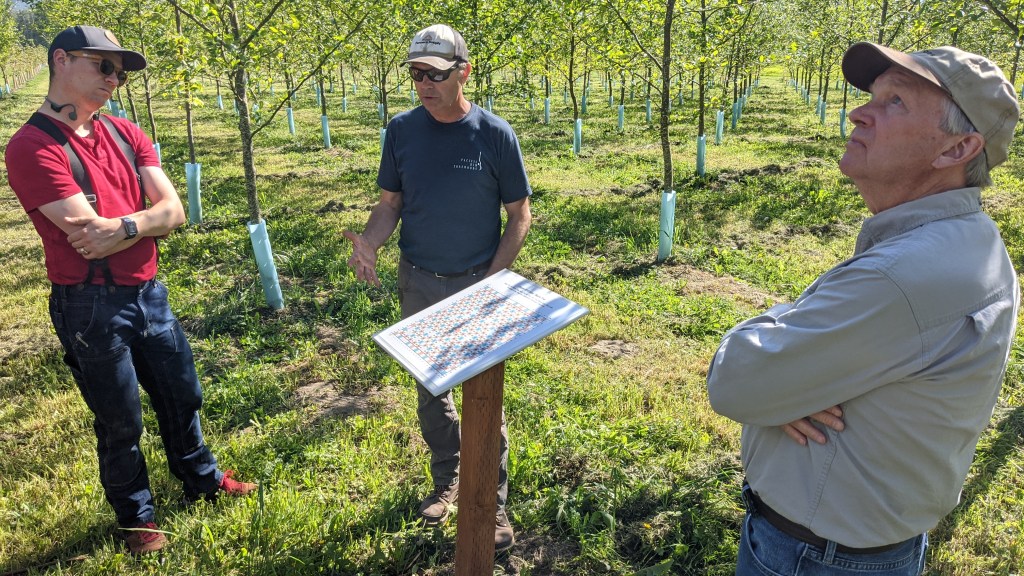
From what I understand, their main goal with this plantation is to see how they can get consistent figure out of wood grain, specifically with native big-leaf maple and alder. They’re running a bunch of spacing experiments with 10’x10′, 8’x8′, and 12’x12′ spacing to see if that makes a difference. They’re growing thousands of trees that are clones of each other, which is pretty interesting to see in person.
Overall it’s been a pretty interesting couple of weeks back in Washington! I have a lot more experiences planned and I’m excited to tell you all about them.
See you next time! ✌️


 Mushrooms and Arches
Leave a reply to Marxci Warkentine Cancel reply